
by Imogen and Louie
Introduction:
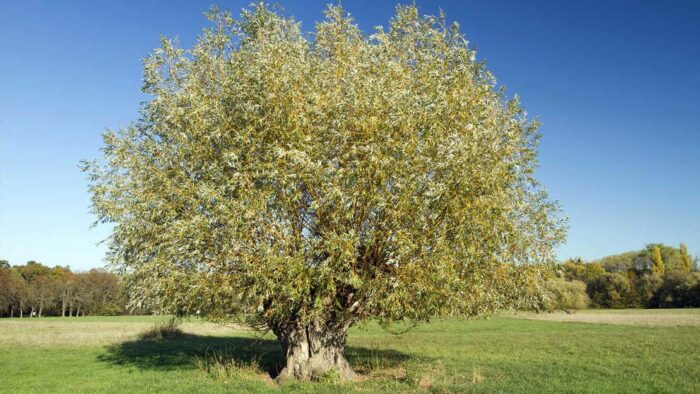
The white willow is the largest species of willow, with mature trees growing up to 25m. They often have an irregular, leaning crown. The bark is grey-brown and develops deep fissures with age, and twigs are slender, flexible and grey-brown.
Quick facts
The cricket bat willow is a hybrid of the white willow and crack willow. Its strong wood is ideal for bats.
Common name: White Willow
Scientific name: Salix alba
Family: Salicaceae
Origin: non – native
Information:
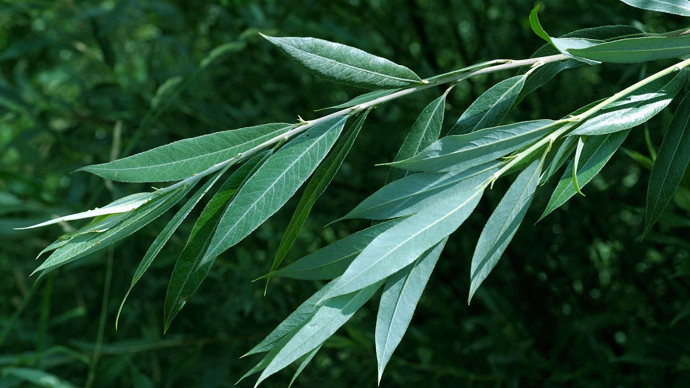
Look out for: the leaves which are hairy all over at first then, as they age, remain downy underneath and sparsely hairy on the top.
Identified in winter by: green to yellow-brown, hairy, narrow buds which are pressed close to the twig.
What does Willow look like?
Leaves
The slender, oval leaves are paler than most other willows due to a felty covering of fine, silky, silvery-white hairs on the underside.
Flowers
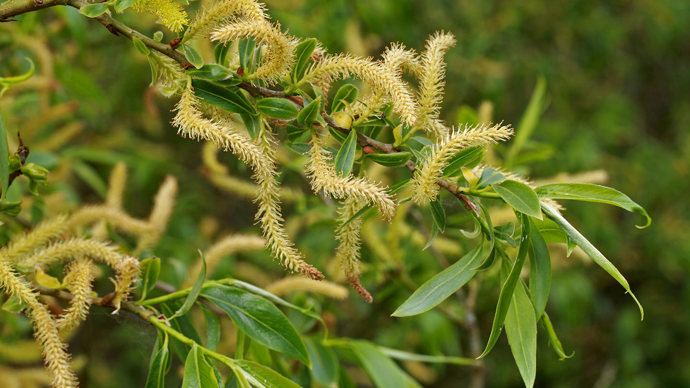
White willow is dioecious, meaning male and female flowers grow on separate trees. Catkins appear in early spring – male catkins are 4–5 cm long and female catkins 3–4 cm long.
Fruits
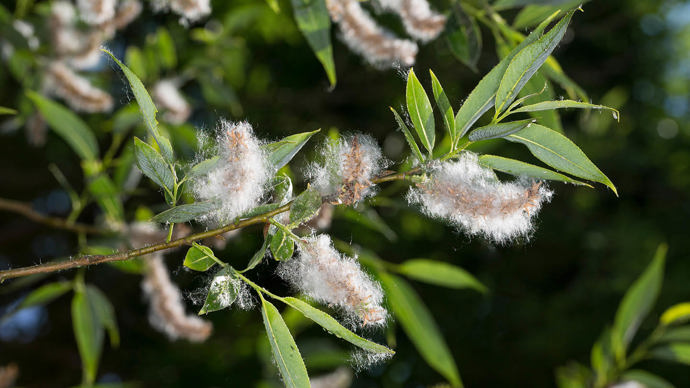
After pollination by insects, the female catkins lengthen and develop small capsules, each containing minute seeds encased in white down which aids dispersal by wind.
Mythology, stories and symbolism
All willows were seen as trees of celebration in biblical times, but this changed over time and today willows are more associated with sadness and mourning. Willow is often referred to in poetry.