

by Esme and Evie
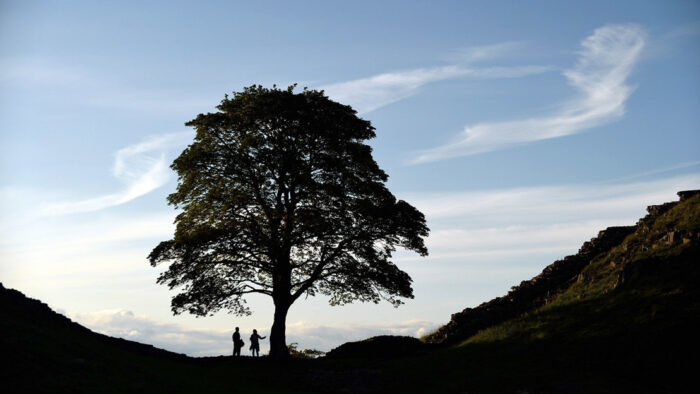
Familiar, romantic, sticky. Sycamore might have been introduced by the Romans or in the 1500s. Since then, it’s colonised woodland becoming a source of food and shelter for wildlife including aphids that leave behind their tacky honeydew.
Quick facts
These broadleaf trees can grow to 35m and live for 400 years. The bark is dark pink-grey, and smooth when young, but becomes cracked and develops small plates with age. Twigs are pink-brown and hairless.
Common name: Sycamore
Scientific name: Acer pseudoplatanus
Family: Sapindaceae
Origin: Non-native
Information:
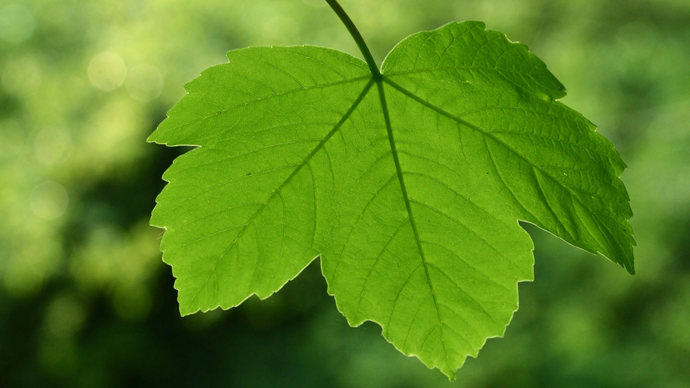
Look out for: leaf veins which are hairy on the underside.
Identified in winter by: twigs which are pink-brown and have no hairs.
What does sycamore look like?
Leaves
Palmate leaves measure 7–16cm and have five lobes. Leaf stalks of younger trees are characteristically red.
Flowers
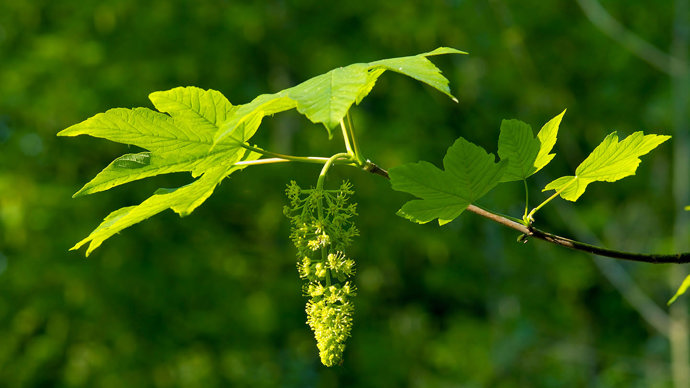
Small, green-yellow and hang in spikes, or ‘racemes’.
Fruits
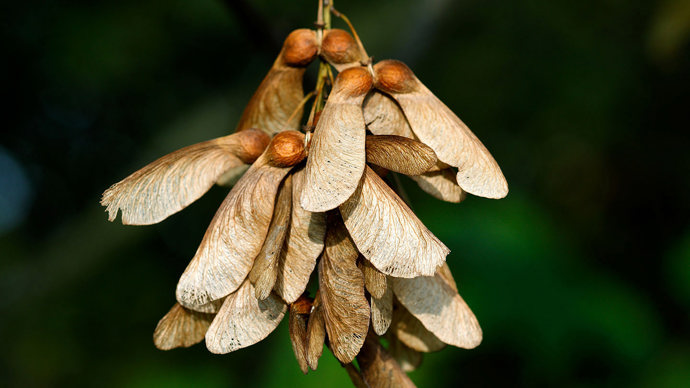
After pollination by wind and insects, female flowers develop into distinctive winged fruits known as samaras.
Mythology and symbolism
Sycamore trees have been revered by many cultures throughout history for their beauty, strength, and longevity.
Ancient Greece in Celtic mythology, the sycamore was associated with the world tree, a sacred tree that connects heaven, earth, and the underworld. The Celts believed that the sycamore was a home to fairies and other spirits, and they often planted sycamore trees near their homes for protection.
In Christianity, sycamore is associated with the story of Zacchaeus, a tax collector who climbed a sycamore tree to see Jesus. When Jesus saw Zacchaeus, he called him down and invited himself to Zacchaeus’s house. This story is often interpreted as a symbol of God’s love and forgiveness for all people, regardless of their social status or past sins.