

By Francesca and Violet
Hazel is often coppiced, but when left to grow, trees can reach a height of 8m and live for up to 80 years (if coppiced, hazel can live for several hundred years). It has a smooth, grey-brown, bark, which peels with age, and bendy, hairy stems. Leaf buds are oval, blunt and hairy.
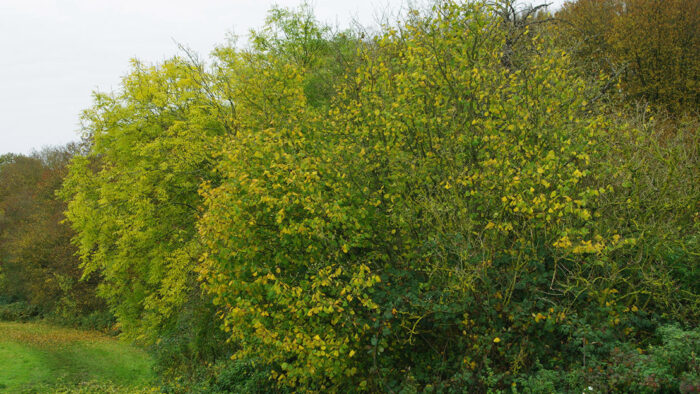
Quick facts
Common name: Hazel
Scientific name: Corylus avellana
Family: Betulaceae
Origin: native
Look out for: leaves which are soft to the touch because of the downy hairs on the underside. Hazel is often coppiced.
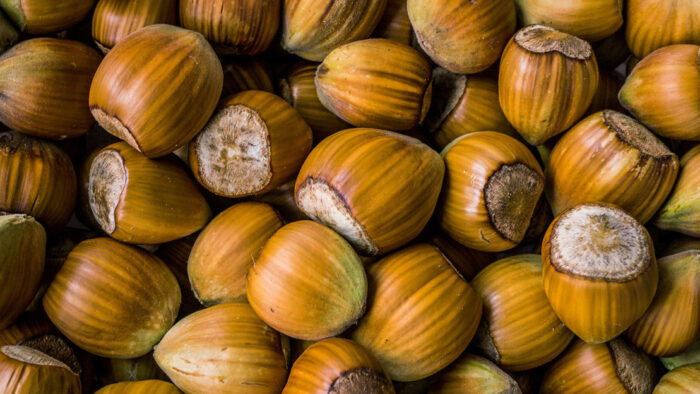
Identified in winter by: its nuts, which are each held in a short, leafy husk which encloses about three quarters of the nut. Small, green catkins can be present in autumn.
What does Hazel look like?
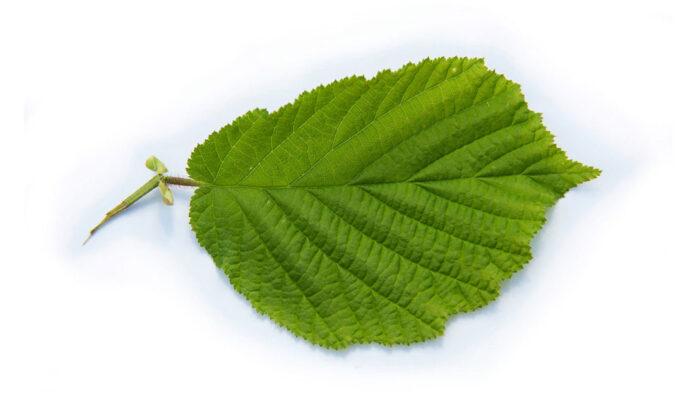
Leaves: Round to oval, doubly toothed, hairy and pointed at the tip. Leaves turn yellow before falling in autumn.
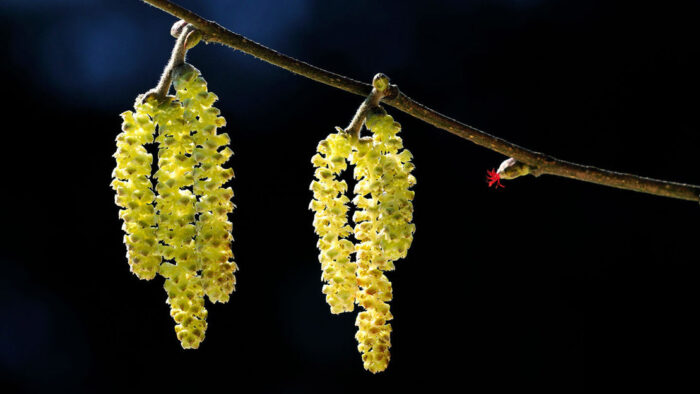
Flowers: Hazel is monoecious, meaning that both male and female flowers are found on the same tree, although hazel flowers must be pollinated by pollen from other hazel trees. The yellow male catkins appear before the leaves and hang in clusters from mid-February. Female flowers are tiny and bud-like with red styles.
Fruits: Once pollinated by wind, the female flowers develop into oval fruits which hang in groups of one to four. They mature into a nut with a woody shell surrounded by a cup of leafy bracts (modified leaves)
Mythology, stories and symbolism:
Hazel has a reputation as a magical tree. A hazel rod is supposed to protect against evil spirits, as well as being used as a wand and for water-divining. In some parts of England, hazelnuts were carried as charms and/or held to ward off rheumatism. In Ireland, hazel was known as the ‘Tree of Knowledge’, and in medieval times it was a symbol of fertility.