

By Thea & Willow
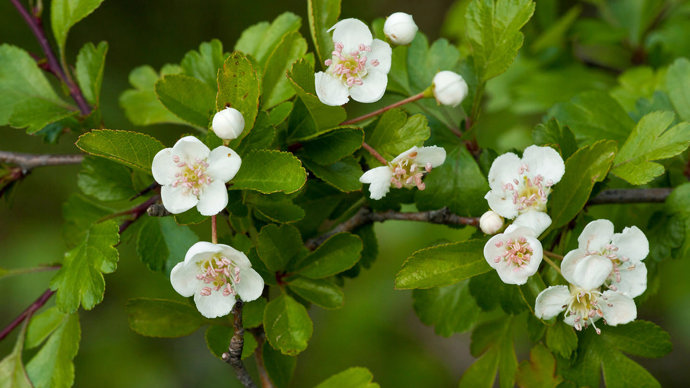
Mature trees can reach a height of 15m and are characterised by their dense, thorny habit, though they can grow as a small tree with a single stem. The bark is brown-grey, knotted and fissured, and twigs are slender and brown and covered in thorns.
Quick facts
Common name: Hawthorn
Scientific name: Crataegus laevigata
Family: Rosaceae
Origin: native
Information: Dense and pungent, but with fruits that are enjoyed by birds and humans alike, the Midland hawthorn is a supremely useful tree whose natural range is not fully understood.
Look out for: the small lobed leaves, spiny twigs and berries (haws).
Identified in winter by: the spines that emerge from the same point as the buds; distinguishing them from blackthorn (Prunus spinosa) which has buds on the spines in winter.
What does it look like?
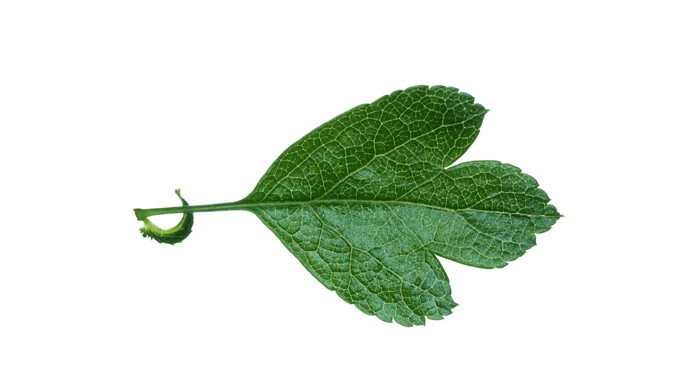
LeavesAround 6cm in length and comprised of toothed lobes, which cut at least halfway to the middle or ‘mid-rib’. They turn yellow before falling in autumn.
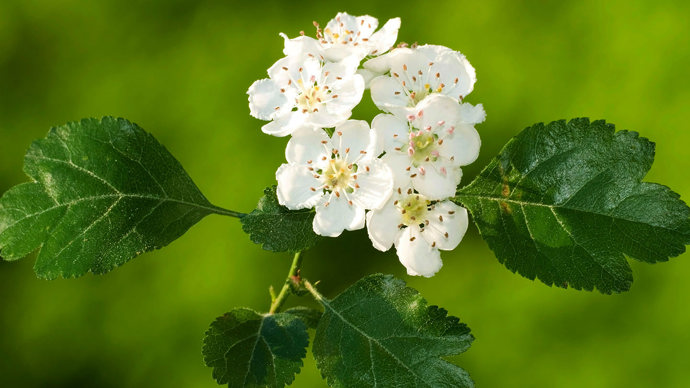
Flowers: Hawthorns are hermaphrodite, meaning both male and female reproductive parts are contained within each flower. Flowers are highly scented, white or occasionally pink with five petals, and grow in flat-topped clusters.
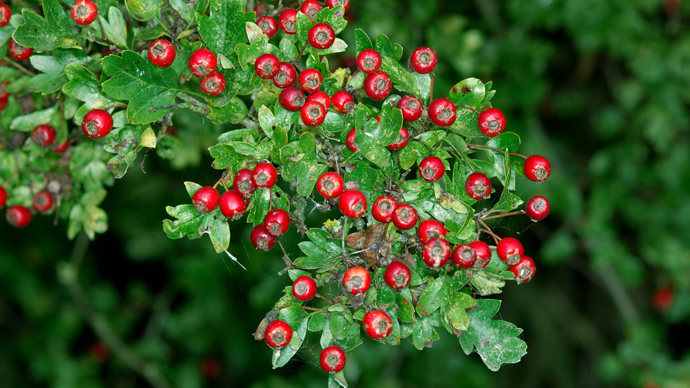
Fruits: Once pollinated by insects, they develop into deep-red fruits known as ‘haws’.
Mythology, stories and symbolism
When cut, the flowers have such a foul smell that medieval people said it reminded them of the stench of the Great Plague.