
by Kobe and Dan
Feared by the devil. Favoured by foragers. Elder is the very essence of summer with its fragrant flowers and soot-dark fruits. It was said that an elder planted by your house would keep the devil away.
Quick facts
Common name: Elder
Scientific name: Sambucus nigra
Family: Adoxaceae
Origin: native
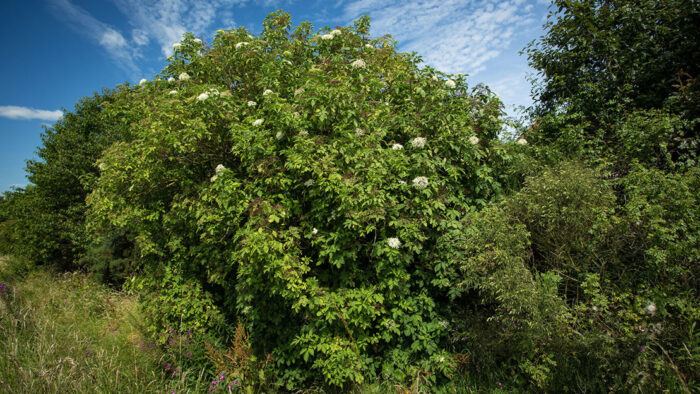
Mature elder trees grow to a height of around 15m and can live for 60 years. Elder is characterized by its short trunk (bole), and grey-brown, corky, furrowed bark. It has relatively few branches.
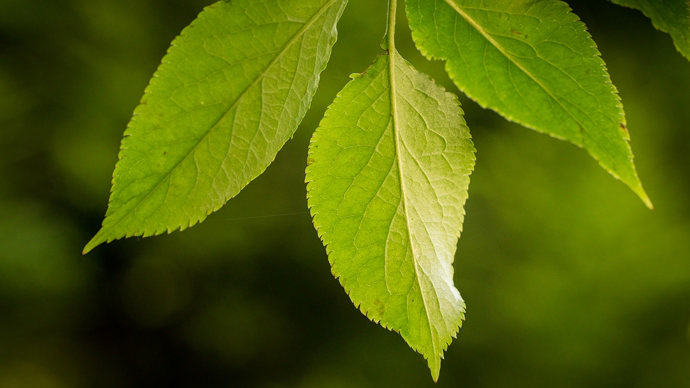
Look out for leaves which have 5–7 pairs of leaflets with sparsely serrated edges.
Identified in winter by: the green, unpleasant-smelling twigs which are hollow or have a white pith (spongy tissue) inside. Buds have a ragged appearance, often with leaves showing through the bud scales.
What does the Elder look like?
Leaves Pinnate (resembling a feather), with 5–7 oval and toothed leaflets which smell unpleasant when touched or bruised.
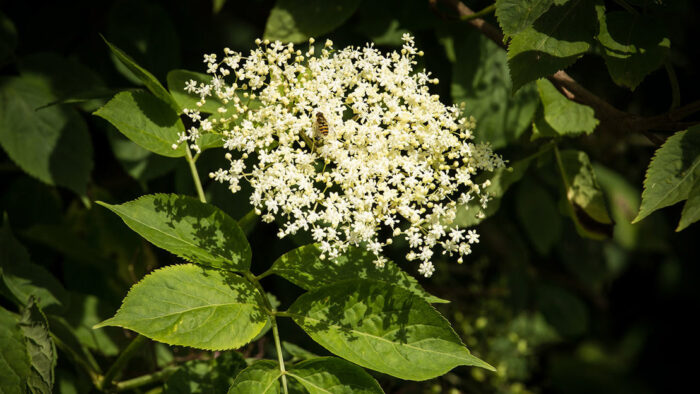
Flowers: 10–30cm across, the individual flowers are creamy-coloured, highly scented, and have five petals. Flowers generally appear from late May.
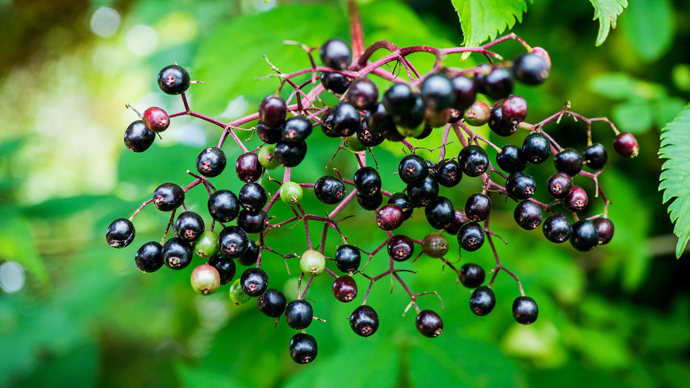
Fruits After pollination by insects, each flower develops into a small, purple-black, sour berry, which ripens from late-summer to autumn. Elders are hermaphrodite, meaning both the male and female reproductive parts are contained within the same flower.
Mythology, stories and symbolism
It was thought that if you burned elder wood, you would see the Devil, but if you planted elder by your house it would keep the Devil away.
Uses of elder
Elder wood is hard and yellow-white. Mature wood is good for whittling and carving, while smaller stems can be hollowed out to make craft items.
Elder foliage was once used to keep flies away and branches were often hung around dairies.
Although the flowers and cooked berries (pulp and skin) are edible, the uncooked berries and other parts of plants from the genus Sambucus are poisonous.
The flowers are often used to make wine, cordial or tea, or fried to make fritters. The vitamin C-rich berries are often used to make preserves and wine, and can be baked in a pie with blackberries.
Elder is also a great source for a variety of coloured dyes and historically it was used to make lushly patterned Harris Tweed. Blue and purple dye was obtained from the berries, yellow and green from the leaves, and grey and black dye was made from the bark.
Elder is a popular small tree for gardens, and many cultivated varieties exist with different coloured foliage and flowers.