
By Emily and Emily
Quick facts
Common names: ash, common ash, European ash
Scientific name: Fraxinus excelsior
Family: Oleaceae
Origin: native
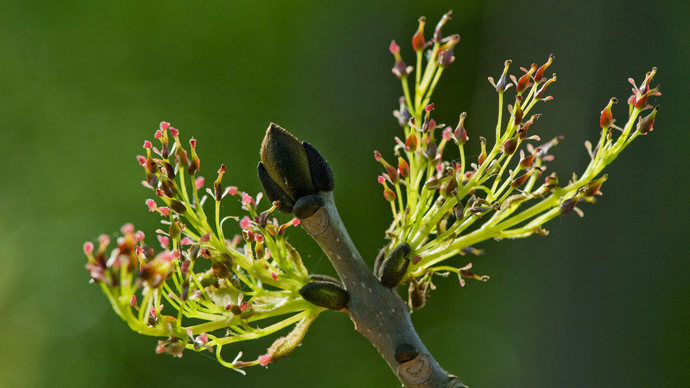
When fully grown, ash trees can reach a height of 35m. Tall and graceful, they often grow together, forming a canopy. The bark is pale brown to grey and fissures as the tree ages. The tree is easily identified in winter by its smooth twigs that have distinctive black, velvety leaf buds arranged opposite each other.
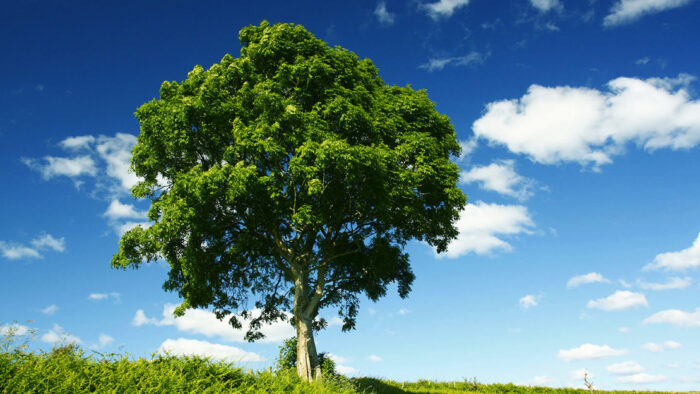
Look out for: the black buds and clusters of seeds which are key features.
Identified in winter by: its distinctive black buds and flattened twigs.
What does ash look like?
Leaves
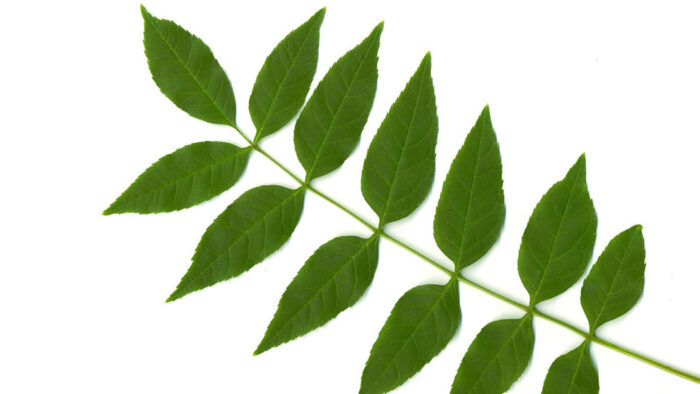
Typically comprising 3–6 opposite pairs of light green, oval leaflets with tips up to 40cm long, the leaves can move in the direction of sunlight, and sometimes the whole crown of the tree may lean in the direction of the sun. Another characteristic of ash leaves is that they fall when they are still green.
Flowers
Ash is dioecious, meaning that male and female flowers typically grow on different trees, although a single tree can also have male and female flowers on different branches. Both male and female flowers are purple and appear before the leaves in spring, growing in spiked clusters at the tips of twigs.
Fruits
Once the female flowers have been pollinated by wind, they develop into conspicuous winged fruits, or ‘keys’, in late summer and autumn. They fall from the tree in winter and early spring, and are dispersed by birds and mammals.
Mythology and symbolism
The ash tree was thought to have medicinal and mystical properties and the wood was burned to ward off evil spirits. In Norse mythology, ash was the ‘Tree of Life’ and the first man on Earth was said to have come from an ash tree. In Britain, druids regarded the ash as sacred and their wands were often made of ash because of its straight grain.